Fresh Breath
Halitosis: What Causes Bad Breath and What Fixes It
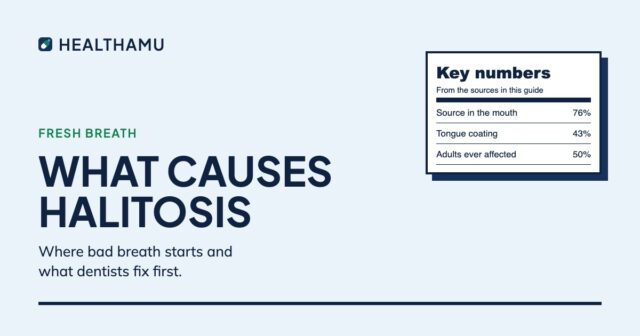
Halitosis is the medical term for bad breath that lasts. In a study of 2,000 clinic patients, 76% had a cause inside…
Healthamu reviews the supplements sold through video ads and sales pages. We list what is in the bottle, set each dose beside the amounts used in human studies, and add up the real cost, shipping and refund rules. You get pros, cons and who it suits. No star ratings.
Our method
Health topics
Buyer checklist
Six checks that take ten minutes and can save you the price of a six-bottle bundle.
Every supplement comes with a Supplement Facts label. It shows the active ingredients, the dose per serving and the fillers or flavorings. If the ad will not show it, you cannot judge what you are buying.
The FTC tells shoppers to learn the total cost, including shipping, handling, taxes and other fees. Read the terms of the deal too. Some low prices only apply if you buy extra products you did not want.
A seller has to explain how to cancel before it takes your card details. If that explanation is missing, or the trial length and renewal date are vague, treat the offer as a subscription you may struggle to stop.
ClickBank says most products sold through it have a sixty day refund period. Note the last day on your calendar. Also check who pays return shipping and whether a restocking fee applies, as the FTC suggests.
The FTC says a credit card gives you the best protection if something goes wrong. It warns never to buy from a seller that insists on gift cards, wire transfers, payment apps or cryptocurrency.
Save the company name and website, what you ordered, the date, the price, the return policy and every email. Sales pages change often, so a screenshot of the offer on the day you bought helps later.
Label decoder
Every supplement sold in the US carries this panel. Six parts tell you most of what you need before you buy.
The FDA defines a serving as the largest amount the label recommends at one time. Directions of 1 to 3 tablets mean a serving of 3. Divide the bottle by that number.
This column is the dose you swallow each time. The maker suggests it, and ODS notes that your health care provider might decide a different amount suits you better.
The label must give the blend’s total weight and list what is in it from most to least by weight. It does not have to give the amount of any single ingredient.
Fillers, binders and flavorings sit here, below the panel. Check this line if you have an allergy or avoid gelatin, gluten, dyes or certain sweeteners.
Any claim about how the product affects the body must come with a statement that the FDA has not evaluated it. The product is not intended to diagnose, treat, cure, mitigate or prevent disease.
ConsumerLab.com, NSF International and U.S. Pharmacopeia test for proper manufacture, listed ingredients and harmful contaminants. ODS says these seals do not guarantee that a product is safe or effective.
Evidence snapshot
Grades describe the human evidence for the use each ingredient is sold for, not whether a product works.
| Ingredient | Often sold for | What the research shows | Evidence |
|---|---|---|---|
| Melatonin | Sleep, jet lag | May help with jet lag. Sleep medicine guidelines found too little strong evidence to recommend it for chronic insomnia. A 2023 study found 22 of 25 gummy products inaccurately labeled. Source: NCCIH: Melatonin, What You Need To Know | Moderate |
| Fenugreek | Blood sugar | May help lower blood sugar in type 2 diabetes, but many studies were not high quality. Not safe in pregnancy above food amounts because of a link to birth defects. Source: NCCIH: Fenugreek | Limited |
| Asian ginseng | Energy, focus, fatigue | Most trials were small and under 3 months. A 2023 review suggested a small benefit for general fatigue. Some studies found better thinking in middle-aged adults, not young adults. Source: NCCIH: Asian Ginseng | Limited |
| Chromium | Appetite, fat loss | Might help you lose a very small amount of weight and body fat. Larger amounts can cause watery stools, headache, nausea, dizziness and hives. Source: NIH ODS: Dietary Supplements for Weight Loss | Limited |
| Cinnamon | Blood sugar, weight loss | Research does not clearly support it for any condition. Many studies did not make clear which species or plant part was tested. Large amounts may upset digestion. Source: NCCIH: Cinnamon | Weak |
| Milk thistle | Liver detox | Liver trials were conflicting or too limited. Two NCCIH-funded studies found no benefit. Some products held silymarin amounts far from the label or were contaminated. Source: NCCIH: Milk Thistle | Weak |
| Bitter orange | Fat burning, energy | Not clearly shown to help any health purpose. Heart rhythm problems, heart attacks and strokes were reported with products that contained it, usually alongside other stimulants. Source: NCCIH: Bitter Orange | Weak |
| Yohimbe | Male performance, fat loss | Too little research to show it helps anything. Yohimbine is linked to irregular heartbeat, heart attacks and seizures. Most products do not state how much they contain. Source: NCCIH: Yohimbe | Avoid |
Red flags
We look for each of these on every product page we review, and we tell you when we find one.
A dramatic weight loss story with a tiny disclaimer is still misleading. The FTC says advertisers must clearly show the results a typical buyer can expect. FTC Health Products Compliance Guidance
For health benefit claims, the FTC generally expects randomized, controlled human clinical testing. If the page names no trial, size or length, the claim has nothing behind it you can check. FTC Health Products Compliance Guidance
Tradition is not proof. The FTC holds claims based on traditional use to the same standard of competent and reliable scientific evidence as any other health claim. FTC Health Products Compliance Guidance
The FDA calls products sold this way, without proof they are safe and effective, health fraud. These scams waste money and can delay a proper diagnosis and treatment. FDA: Health Fraud Scams
The FTC says free trials usually ask for a card number so the company can charge you if you do not cancel in time. Some sellers then make cancelling hard. FTC: Free Trials, Auto-Renewals and Negative Option Subscriptions (archived copy)
A pre-checked box can let a company keep billing you, add more products or share your details. The FTC says to uncheck any box you do not agree with. FTC: Free Trials, Auto-Renewals and Negative Option Subscriptions (archived copy)
Refund playbook
A ClickBank order shows on your statement as CLKBANK*. Find the order email or note the card’s last four digits and your zip code before you start.
Enter the order number, or your zip code and the card’s last four digits, then choose Look Up My Order and Request A Refund. Pick a reason and press Send.
Most ClickBank products allow sixty days. Once that passes, the refund option disappears and you must contact the seller using the details in the Seller Information section.
Follow the company’s cancel steps and keep a copy of your request plus notes on every call. Then watch your card statements for charges after the cancel date.
If the seller keeps charging you or never delivers, file a dispute. For billing errors, the FTC says your letter must reach the issuer within 60 days of the first bill that showed the error.
Safety first
Myths
MythIf it is natural, it cannot hurt me.
FactNatural does not always mean safe. ODS points to comfrey and kava, two all-natural botanicals that can harm the liver.
MythThe FDA checked that it works before it went on sale.
FactThe FDA does not decide whether supplements work before they are marketed, and supplements need no FDA approval to be sold.
MythThe bottle holds what the label says.
FactNot always. In a 2017 study, most of 31 melatonin products did not match their labeled amount, and some milk thistle products were far off on silymarin.
MythA quality seal means the product works.
FactSeals from groups such as USP or NSF confirm manufacture, ingredients and contaminant limits. They do not guarantee safety or effectiveness.
MythCenturies of use prove it works.
FactThe FTC requires the same scientific evidence for traditional use claims as for any other health claim.
Health guides
Halitosis is the medical term for bad breath that lasts. In a study of 2,000 clinic patients, 76% had a cause inside…
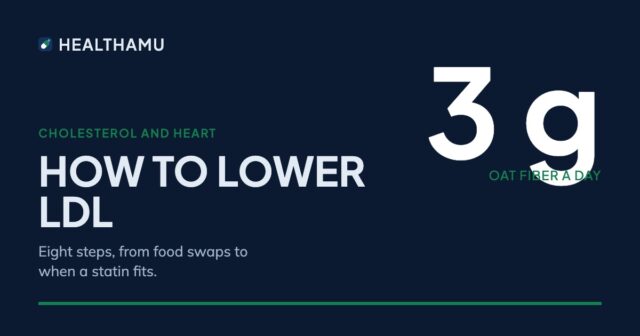
To lower LDL, cut saturated fat, eat about 3 g of oat or barley fiber a day, add plant sterols at two…
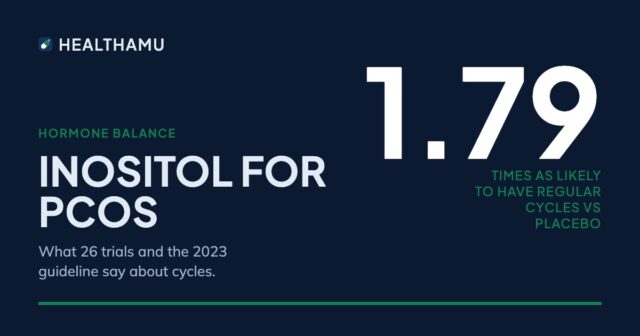
Inositol for PCOS has some trial support. In a review of 26 trials, people taking it were 1.79 times as likely as…
Beta-sitosterol and pygeum have the best evidence among prostate supplements, with modest gains in urinary symptoms and flow in small, short trials…
Boswellia extract and collagen have the best evidence for joint pain, with small but consistent benefits for knee osteoarthritis in pooled trials…
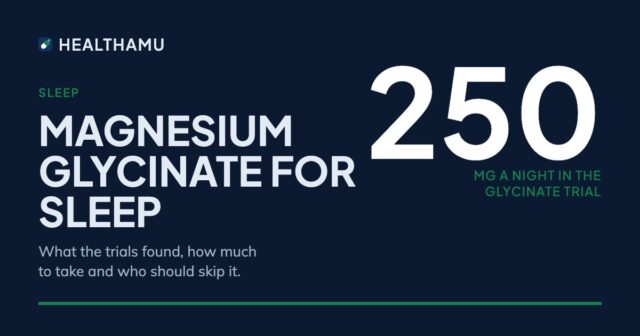
Magnesium glycinate may help sleep a little. In the only trial of this form, 155 adults with poor sleep took 250 mg…
Why read us

Meet the editor
Lucie Bricks is the Reviews Editor at Healthamu, a buyer's guide for supplements sold through online ads. Lucie reads the full label, sets each dose beside the doses used in human studies, grades the research with sources such as the NIH Office of Dietary Supplements and NCCIH, and works out the real cost per day, refund terms and checkout fine print. Lucie is not a doctor, dietitian, nurse or pharmacist. Reviews give pros, cons and who a product suits, never scores.
Questions
Healthamu is a buyer’s guide for people about to order a supplement they saw in an online ad. We look at the label, the doses, the research on each ingredient and the terms of the sale, so you know what you are paying for before checkout.
No. We do not buy, take or lab test the products we write about. We review what any careful buyer can check: the Supplement Facts label, published research from sources such as NIH, and the seller’s price, refund and subscription terms.
Lucie Bricks, our reviews editor, writes and updates them. Lucie is not a doctor, pharmacist or dietitian and does not give medical advice. The work is reading labels, research summaries and sales terms, then explaining them in plain English.
Some links on Healthamu are affiliate links. If you buy through one, we may earn a commission at no extra cost to you. That never changes what we report about a label, a dose, a refund window or a weak piece of research.
From public sources we can link: the NIH Office of Dietary Supplements, the National Center for Complementary and Integrative Health, the FDA, the FTC and seller support pages such as ClickBank. Each page lists its sources and the date we read them.
No. Our pages explain what a product label and the research say, and how to protect your money. Whether a supplement suits you depends on your health and medicines, so ask your doctor or pharmacist before you start one.
We fix it and add a dated note saying what changed. We also update reviews when a seller changes a price, a label or a refund policy. If you spot an error, tell us through the contact page and include a link to your source.
Plain-English supplement reviews for people who saw a product in an ad. We check the label, the doses, the research and the refund rules, then show our sources. No ratings and no paid placements.
Edited by Lucie Bricks, Reviews Editor
Healthamu is general information, not medical advice. Dietary supplements are not reviewed by the FDA for safety or effectiveness before they are sold. Talk to your doctor before you start, stop or combine supplements. Some links are affiliate links: if you buy through them we may earn a commission at no extra cost to you, and it never changes what we report.